Dynamic Pricing Without the Backlash: How Restaurants Can Borrow Yield Management Without Becoming the Next Surge-Pricing Headline
Airlines and hotels have priced dynamically for decades. So why does every restaurant attempt at it end up in a customer-revolt headline? This post breaks down what restaurants get wrong about dynamic pricing, what AI-native price intelligence actually looks like, and a four-rule playbook for raising margin without losing trust.

The headline nobody wants
Every twelve to eighteen months a major chain tests dynamic pricing, a screenshot leaks, and the internet decides the restaurant is gouging its regulars. The chain backpedals, the press cycle ends, and the underlying margin problem comes back the next quarter — untouched.
It is tempting to read those stories and conclude that dynamic pricing simply does not belong in restaurants. We think the opposite. The discipline works — airlines, hotels, ride-share and ticketing all run on it. What restaurants keep getting wrong is how they implement it, not whether they should.
This post is a practical look at the gap between "surge pricing" (what makes the news) and revenue intelligence (what actually moves margin without breaking trust).
Why restaurants are different from airlines
When an airline raises a fare, the customer is comparing it against another airline's fare. There is no "fair" reference price — only the next-cheapest seat on a comparable route. The customer self-selects: book now or wait.
Restaurants are different in three uncomfortable ways:
- The price is printed. Even if it lives on a screen, guests anchor to the last price they paid. Any change feels like a verdict on them, not on the market.
- The product is emotional. A $14 burger is not a seat 27B. Guests bring nostalgia, identity and routine to the table. Pricing decisions land on top of that.
- The competition is hyper-local. Two blocks of difference and the entire competitor set changes. National pricing rules almost always misfire at the unit level.
Every successful restaurant pricing program we have studied starts by accepting these three constraints, not fighting them.
What "dynamic" should actually mean for a restaurant
When most operators hear "dynamic pricing," they picture the airline model: prices that move up and down hour by hour based on demand. That is not what works in food service.
A more useful frame is continuous calibration: prices change rarely, but the decision to change them is informed continuously by demand signals, channel mix, competitor moves, food cost and elasticity. The shelf price stays stable for the guest. The intelligence behind it does not.
In practice, this looks like:
- Channel-aware base prices. Dine-in, pickup, first-party delivery and marketplace channels each have a different cost-to-serve and a different willingness-to-pay. Treating them as one price is leaving 4-9 points of margin on the table.
- Item-level elasticity, not menu-wide hikes. Most menus have two or three items that absorb a large price move with no measurable demand impact, and a long tail that does not. Across-the-board hikes punish the items that did have headroom and tax the items that did not.
- Daypart and event windows, not hour-by-hour swings. A higher Friday-dinner price for a small set of high-elasticity items is invisible to the regular. An app notification that "your usual costs $3 more right now" is a guaranteed PR cycle.
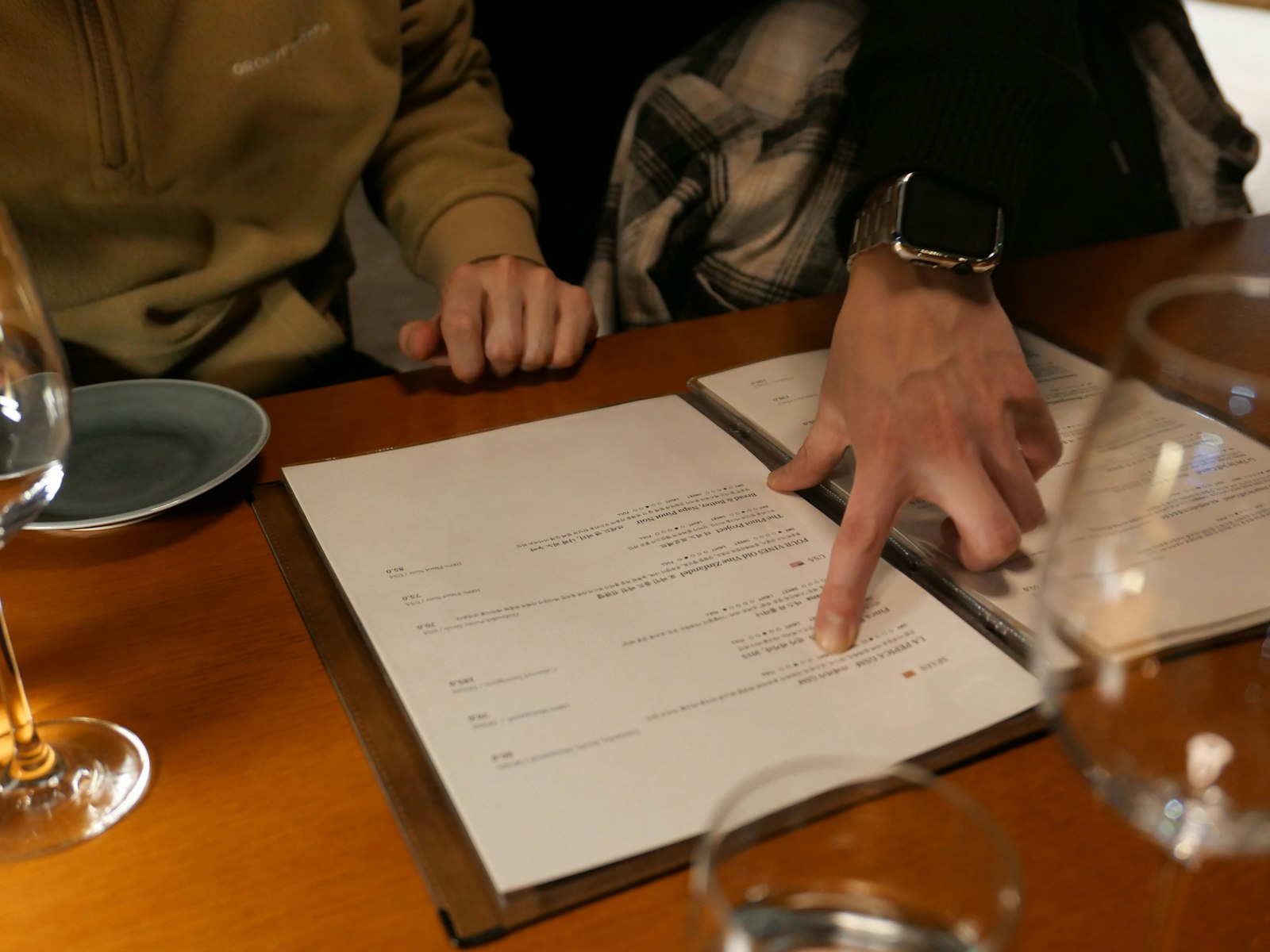
Guests do not compare your menu to a yield curve. They compare it to the menu they remember.
The four rules of margin-safe pricing
After studying the chains that quietly raised margin three to seven points without a backlash, the pattern is consistent. They follow four self-imposed rules.
Rule 1: Move silently, but never secretly
Move prices on a cadence — weekly, biweekly, monthly — that is short enough to capture demand shifts but long enough that no individual change is news. The classic mistake is changing prices per order. The trust cost is not worth the marginal revenue.
The "but never secretly" half matters. If a guest asks why an item costs more this week than last, your team should be able to answer in one sentence: "We refresh menu prices every two weeks based on cost and demand, like most restaurants do — this week sourdough went up about a dollar."
Rule 2: Price the channel, not the item
A delivery customer is not eating the same product as a dine-in customer. They are eating "the food, plus 35 minutes in a bag, plus a $9 fee they did not pay you, plus a tip." Their price tolerance is structurally different. Modeling channels separately is the single highest-ROI move most operators have not made.
A useful mental check: if your dine-in and delivery menus carry identical prices, one of them is wrong. Almost always, delivery is mispriced down.
Rule 3: Let the long tail do the work
In a 60-item menu, the top 8 items typically drive 55-70% of revenue. Those are the trust anchors — guests track them, regulars order them, competitors benchmark them. Move them conservatively, almost defensively.
The remaining 50+ items are where the math actually lives. These are the items where a $0.50-$1.50 move every quarter compounds into real margin, and the items most guests cannot price from memory.
Rule 4: Watch your competitive corridor, not the national index
The "average burrito price went up 6%" stat that ran in the trade press last quarter is useless to your store. What matters is: within a 1.5-mile radius of this unit, where does my burrito sit in the price ladder? If you slip from rank 3 to rank 5 against your real competitors, that is a signal. National averages are not.
This is exactly the gap that motivated us to build Forkast in the first place — operators kept telling us they had national benchmarks but no local ones, and their pricing decisions were flying blind below the unit level.

Continuous calibration is a back-of-house discipline, not a guest-facing experience.
What AI actually adds (and does not)
There is a lot of AI theater in the pricing space right now. To stay honest, here is the short list of where machine learning genuinely earns its keep in restaurant pricing — and where it does not.
Where it earns its keep:
- Item-level elasticity estimation. Pulling clean elasticity coefficients from messy POS data used to take an analyst a week per category. Modern models do it in minutes and update as new data comes in.
- Competitor menu monitoring. Ingesting hundreds of competitor menus across delivery marketplaces and surfacing meaningful price moves (not noise) is exactly the kind of high-volume, low-stakes-per-decision task ML is built for.
- Promo cannibalization detection. Identifying which BOGO is stealing from a full-margin upsell — across millions of tickets — is something humans simply cannot do at scale.
Where it does not:
- Naming the price. A model can recommend $12.49 with high confidence. Whether you ship it at $11.99, $12.49 or $12.99 is still a judgment call about brand, neighborhood and trust. Treat the model as a recommender, not a decider.
- Defending the change to a guest. Tone, story, framing — those are still your team's job.
If a vendor tells you their model will "set your prices for you," they are either over-promising or under-respecting the product you sell.
A 30-day pilot you can actually run
You do not need a transformation program to test this. Most operators we work with start with the same pilot:
- Week 1: Pull 90 days of POS by item, by daypart, by channel. Identify your top 10 items by revenue and your bottom 25 by velocity.
- Week 2: Hold the top 10 stable. On the bottom 25, run small price moves (±$0.50-$1.50) and tag them.
- Weeks 3-4: Measure attach rate, mix shift, and contribution margin against the prior four-week baseline. Most pilots see 1.5-3 margin points on the moved items with no measurable complaint volume.
- Decide. If the pilot worked, you now have a defensible internal case for a continuous calibration program. If it did not, you have learned something about your guests' price sensitivity that no benchmark report could tell you.
This is not glamorous, and that is the point. Margin-safe pricing is boring on purpose. The news cycle is reserved for the operators who skipped these steps.
The takeaway
Restaurants do not lose at dynamic pricing because the discipline is wrong. They lose when they import an airline-style execution into a deeply emotional, hyper-local product and get surprised when guests notice.
The operators winning quietly are following a simpler playbook: move silently but never secretly, price the channel rather than the item, let the long tail compound, and watch the local competitive corridor instead of the national index. AI helps with the heavy lifting underneath, but the discipline — and the trust — is yours to build.
That is the version of dynamic pricing that does not make the news. It is also the version that actually moves margin.