Menu Engineering 2.0: Why the Stars-Plowhorses-Puzzles-Dogs Matrix Is No Longer Enough
The classic four-quadrant menu engineering matrix served the industry for forty years. In an era of multi-channel pricing, third-party platforms and minute-by-minute demand data, it is no longer enough. Here is what a modern menu engineering practice actually looks like — and the five signals every operator should be tracking by item, by channel, by daypart.

A 1982 framework, still on the wall
Walk into almost any culinary school in 2026 and you will find Kasavana and Smith's stars / plowhorses / puzzles / dogs menu matrix on a whiteboard somewhere. It has aged remarkably well. Plot every item on a chart of contribution margin versus popularity, sort into four quadrants, push your stars, redesign your puzzles, retire your dogs. Decades of operators have run that exercise and gotten real margin out of it.
The framework was designed for an era where:
- A restaurant had one menu that sold one product to one channel: dine-in.
- Price changes happened once or twice a year when the menu was reprinted.
- "Popularity" meant annual mix percentage measured from a Z-tape.
None of those assumptions hold anymore. Most operators today run at least three concurrent menus (dine-in, first-party delivery, marketplaces), reprice silently throughout the year, and have minute-resolution sales data. A four-quadrant snapshot built on annual averages now hides more than it reveals.
Menu Engineering 2.0 is what happens when you take the spirit of the original framework — push margin, prune drag — and rebuild it for a multi-channel, data-rich, AI-assisted environment.
What the old matrix gets wrong now
Before we describe the new approach, three concrete failure modes of the classic matrix in a modern operation:
Failure 1: Channel blindness. A "star" on dine-in is often a "dog" on delivery once you back out marketplace commissions, packaging cost and the higher refund rate on items that travel poorly. Treating the item as a single entity averages those realities into a number that is true nowhere.
Failure 2: Time blindness. That same item can be a star at lunch and a plowhorse at dinner. The classic matrix collapses the clock and tells you to "promote it more" — but promoting it at lunch crowds out a higher-margin upsell, and promoting it at dinner has no demand to capture.
Failure 3: Cost blindness. The matrix uses a static contribution margin. In a world where chicken thigh, eggs and sourdough have all moved double digits within a single quarter, a margin number that is more than 30 days old is no longer signal — it is folklore.
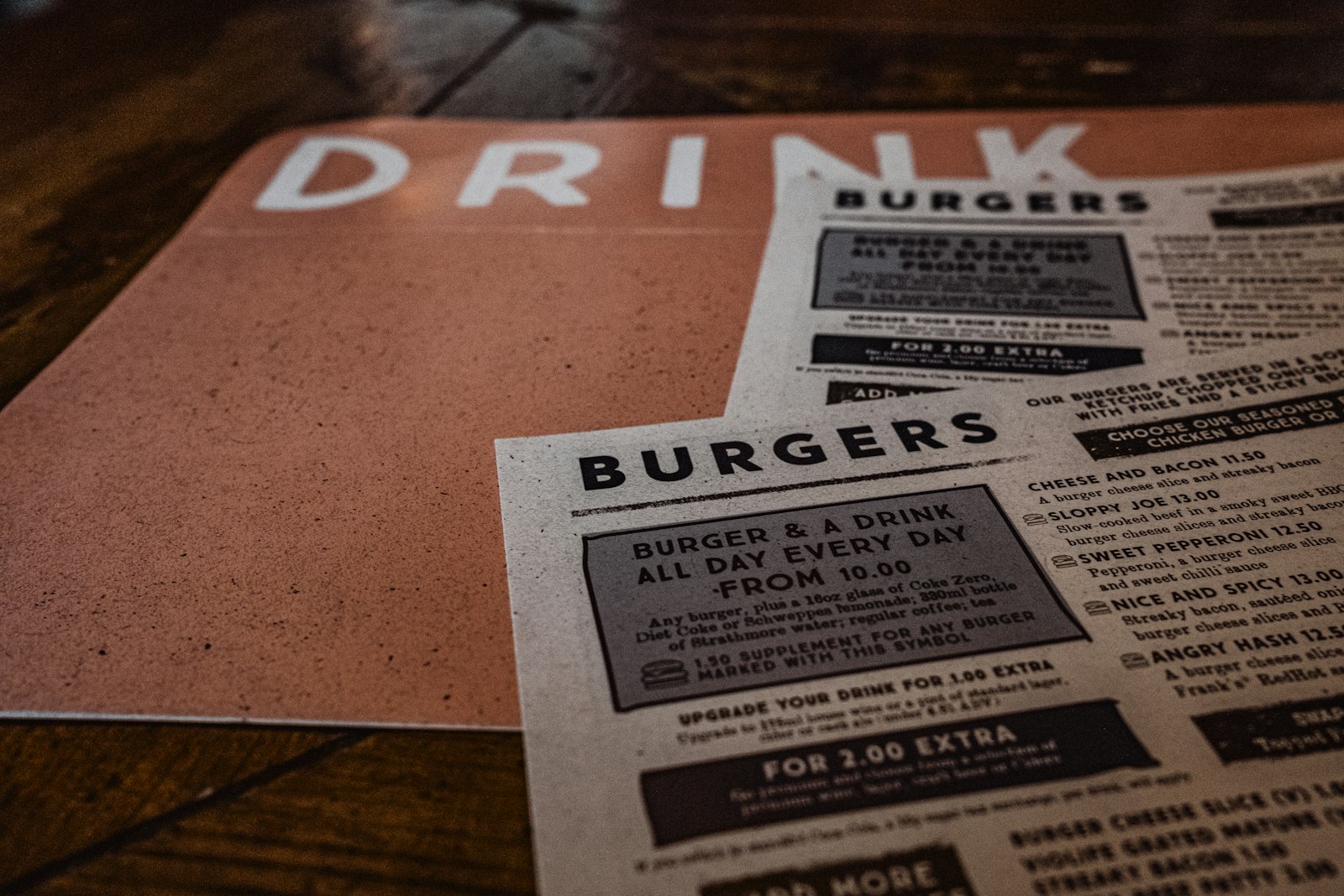
A modern menu is not a poster. It is a portfolio under continuous management.
The five signals every item should carry
A modern menu engineering practice tracks five live numbers per item, per channel, per daypart. None of them are exotic. The discipline is in keeping them current.
1. True channel margin
Not gross margin. Net margin after marketplace commission, packaging, refunds, and the labor delta to assemble for off-premise. For most casual concepts, the spread between dine-in net margin and marketplace net margin on the same item is 12-22 points. Building decisions on the gross number is how operators end up subsidizing third-party orders without realizing it.
2. Mix share within its own basket
Popularity in absolute terms is misleading. What matters is: of the tickets that contain this category, what share does this item win? A wings item that holds 38% of all wings tickets is a dominant player even if total wings volume looks modest. A flagship sandwich that wins only 14% of its own category is in trouble even if overall volume looks healthy.
3. Attach behavior
Some items pull friends. A signature mac-and-cheese might lift average ticket by $4.20 because guests who order it also tend to add a drink and a dessert. The item's own margin is only half the story — the basket lift can flip an apparent plowhorse into a true star.
4. Elasticity coefficient
How much does demand move when price moves 5%? Many menus contain three to five items with near-zero elasticity (regulars order them at almost any price) and a long tail with double-digit elasticity (guests trade down or out the moment price moves). Operators who do not measure this end up doing the opposite of what the data says — protecting the elastic items and squeezing the inelastic ones.
5. Time-to-table or pack
The often-ignored cost. An item that takes 14 minutes to fire and plate at peak burns kitchen capacity that could have produced two or three faster items. On dine-in, that is a service problem; on delivery, it is a courier-late problem; on every channel, it is a margin problem disguised as a labor problem.
When you carry these five numbers per item, the four-quadrant matrix becomes a five-dimensional score, and items move between categories as conditions change. That is the whole point — the menu becomes a portfolio under continuous management instead of a yearly photograph.
The four moves a modern menu team makes
If the old framework gave you four labels (star, plowhorse, puzzle, dog), the new practice gives you four moves. Each one is a deliberate intervention, run on a cadence.
Move 1: Re-position the bestseller
Your top-selling item almost always sits in a non-optimal place on the menu — historically "protected" because nobody wants to mess with it. Modern menu engineering says the opposite: the bestseller is the item with the most information about your guest's price sensitivity, and therefore the item where small repositioning experiments are safest. A photo treatment, a description rewrite, a $0.50 price test — done quietly, measured cleanly.
Move 2: Promote the under-mixed high-margin item
Every menu has at least one item that the operator loves, the kitchen is good at, and the guest ignores. The classic matrix calls these "puzzles." The modern move is to ask why — and treat the answer empirically. Position on the menu? Photo? Price ending? Server-recommendation script? Run an A/B against another store. Most under-mixed high-margin items are reachable with one or two interventions.
Move 3: Bundle the orphan
The bottom 15-20% of the menu by velocity is rarely worth keeping by itself, but is often valuable as a basket builder inside a bundle. Pulling a slow side dish into a $2 add-on inside a popular entree bundle can outperform the same item as a standalone listing by 4-7x — without giving up its standalone price for guests who do still want it.
Move 4: Retire the drag
The hardest move, because every dog has a fan. The modern test is not "do some guests order it" — every item has fans. The test is: if we removed this item, would the next-best alternative recover at least 60% of the lost revenue at higher margin? If yes, the item is dragging the portfolio.
The trick is to retire by silence, not announcement. Pull the item from one channel first (usually delivery), measure the recapture, and only then make the dine-in decision. Operators who announce a beloved item's retirement in advance get the worst of both worlds: a press cycle and lost revenue.
A "star" is not the dish you love most. It is the dish whose math you understand best.
Where AI quietly changes the practice
Most of what we just described used to require a category manager with a spreadsheet, two days, and a strong stomach. Modern tools change three things specifically:
- Cost feeds in continuously. Recipe-level cost tied to live invoice data means contribution margin is current, not "current as of the last quarterly review."
- Elasticity is measured, not guessed. With enough POS history, item elasticity can be estimated from natural price variation across stores and time, no formal experiment required.
- Channel deconstruction is automated. Backing out commissions, packaging and refund rates per item per channel used to be a finance request. It is now a default view.
What AI does not do is decide whether to retire the dish your founder created in 2007. That is still a human call. But it gives the human making it a much clearer picture of what the call will cost and what it will earn.
A 14-day audit you can run this month
If your operation has not refreshed its menu engineering practice in the last year, here is the shortest useful version:
- Days 1-3. Pull 90 days of POS by item, by channel, by daypart. Rebuild contribution margin per item per channel using current invoice cost.
- Days 4-7. Score every item on mix share, attach lift, elasticity proxy and time-to-table. Most operations find that 6-10 items they thought were stable are not.
- Days 8-10. Pick three items each from "re-position," "promote," "bundle," and "retire." Twelve total. Smaller is better.
- Days 11-14. Run the moves in two stores or two zip codes. Hold the rest as control. Measure contribution margin per cover, not just revenue.
If three of the twelve moves work, you have outperformed almost every quarterly menu review your operation has run on instinct. That is the bar.
The takeaway
Kasavana and Smith were right about the spirit: a menu is a portfolio of products, and the operator's job is to manage the mix on purpose, not by accident. They could not have anticipated the channel sprawl, cost volatility and data density of a 2026 restaurant.
Menu Engineering 2.0 keeps the spirit and updates the math. Score every item across five live signals. Run four deliberate moves on a cadence. Let modern tooling do the cost and elasticity work that used to live in spreadsheets. And treat your menu the way a portfolio manager treats a fund — adjusted on purpose, measured against benchmarks, and never confused with a poster on the wall.